The Chicago Market Analysis For Small Business Opportunity
Chicago isn’t a “single market”—it’s a dense, diverse, neighborhood-driven economy where customer demand changes block by block, season by season, and even train stop by train stop. That’s exactly why it can be such a strong city for small businesses: the volume is there, the variety is there, and the right niche can win fast if it’s positioned around real local behavior (commuting patterns, tourism waves, language communities, and price sensitivity). In this analysis, you’ll see the key demographics that shape buying decisions, the economic signals that prove Chicago has money moving through it, the practical city facts entrepreneurs can use immediately, and the most obvious “white space” opportunities that small businesses can step into right now.

Chicago demographics context (quick snapshot): Census.gov+1
- Population (2024 est.): 2,721,308
- Population density (2020): 12,059.8 per sq. mile
- Foreign-born residents (2019–2023): 20.7%
- Language other than English at home (age 5+, 2019–2023): 35.5%
- Bachelor’s degree or higher (age 25+, 2019–2023): 43.3%
- Median household income (2019–2023, 2023 dollars): $75,134
- Poverty rate (2019–2023): 16.8%
- Mean commute time (2019–2023): 33.5 minutes
- Households with broadband (2019–2023): 87.4%
Chicago’s Small-Business Demand Engine: A City Built on Volume and Variety
Chicago supports small businesses because the city naturally creates repeat demand: dense neighborhoods, nonstop movement, and huge “everyday consumption” categories that don’t depend on a single industry. The top-line numbers back that up. Chicago’s total retail sales (2022) are roughly $39.4B, with accommodation and food services sales (2022) around $13.8B—two categories that are basically the heartbeat of small business opportunity (things people buy often, locally, and with urgency). Add in major revenue activity from transportation and warehousing and health care/social assistance, and you have an economy that isn’t fragile—it’s diversified. For entrepreneurs, that means you can build something hyper-local (one neighborhood), multi-location (several pockets of the city), or even B2B (serving companies that serve the city), and still find real demand—if you pick the right segment and communicate clearly. Census.gov
Chicago Facts Small Businesses Can Use Immediately
Chicago is unusually “structured” for a big city, and that structure helps small businesses market smarter. The city is divided into 77 community areas (with many more recognized neighborhoods), and it has 50 wards—useful because customers often self-identify by area, and local identity strongly shapes where people buy. Chicago+1 Movement patterns matter too: the CTA recorded 309.2 million bus + rail rides in 2024, meaning foot traffic isn’t random—there are predictable corridors where visibility, convenience, and strong local reputation turn into sales. CTA And Chicago isn’t just “local demand”—it has massive inbound flow: O’Hare processed 80M+ passengers in 2024 (a huge signal for hospitality, service needs, and logistics-adjacent businesses), and the city’s convention ecosystem is anchored by McCormick Place, which offers 2.6 million sq. ft. of exhibit halls. Chicago+1
Market Gaps and White Space Entrepreneurs Can Exploit in Chicago
The biggest misconception about Chicago is that “everything already exists.” In reality, the gaps are in execution and fit, not in the basic idea. Because 35.5% of residents speak a language other than English at home and 20.7% are foreign-born, there’s consistent opportunity for bilingual or culturally fluent businesses that don’t just translate words—but translate expectations (how people prefer to buy, ask questions, schedule, pay, and review). Census.gov Chicago’s size also creates service gaps where convenience wins: mobile/on-site services, faster fulfillment, clearer communication, and better customer experience in “boring” categories (maintenance, cleaning, repairs, personal services, home + small office support). And because the city has both higher-income pockets and real price sensitivity (poverty rate 16.8%), businesses that offer tiered options—value, standard, premium—can capture wider demand without diluting their brand. Census.gov
Chicago Isn’t One Market: Win by Treating Neighborhoods Like Separate Cities
If you market Chicago like one audience, you’ll waste money. The practical reality is that Chicago behaves like dozens of micro-markets stacked together: different neighborhoods have different lifestyles, foot-traffic rhythms, price ceilings, and service expectations. The city’s 77 community areas exist for a reason—they’re stable planning/statistical units because neighborhood-level differences are real and persistent. Census.gov+1 For a small business, this becomes an advantage: you can start by dominating a tightly defined area (and becoming “the go-to” locally) before expanding. The best Chicago strategies often look like this: (1) pick a clear neighborhood cluster, (2) build trust through hyper-local visibility and reviews, (3) partner with adjacent businesses, and (4) expand outward once referrals are predictable. This approach beats “citywide” competition because you’re not trying to outspend larger players—you’re out-positioning them where they’re weakest: local relevance.
Tourism and Conventions: Chicago’s “Extra Demand” That Many Small Businesses Ignore
Tourism matters in Chicago even if you don’t run a hotel or a deep-dish spot. In 2024, Choose Chicago estimated 55.3 million visitors and $20.6B in economic impact—that’s not just entertainment spending; it’s spillover demand for transportation, quick services, personal care, last-minute shopping, and “I need this now” purchases. Choose Chicago+1 On top of that, the convention engine is real: McCormick Place alone advertises 2.6 million sq. ft. of exhibit halls, which translates into waves of professional visitors who behave differently than locals (short time horizons, higher willingness to pay for convenience, and heavy reliance on mobile search). McCormick Place+1 A smart small business plan in Chicago asks: “How do I capture local repeat demand and skim the visitor surge without changing my whole model?” The winners create lightweight offers tailored to visitors (quick turnarounds, clear booking, delivery, gift-ready packaging) while keeping the core business stable for locals.
Transportation and Logistics: The Hidden Advantage Behind Many Chicago Winners
Chicago businesses benefit from infrastructure that quietly increases opportunity: dense transit usage, a huge airport, and national freight relevance. If O’Hare handled 80M+ passengers in 2024, that’s a steady stream of people, schedules, deliveries, and time-sensitive needs moving through the region. Chicago Combine that with daily urban movement (CTA’s 2024 ridership scale), and you get a city where convenience-based models can thrive: pickup/dropoff, mobile service, route-optimized delivery, and “near transit” retail/service concepts. CTA Even if you’re not in logistics, you can borrow the logic: reduce friction, meet customers where they already move, and align offers to commuting reality. Chicago’s mean commute time is 33.5 minutes—a strong hint that time is a scarce resource, and small businesses that save time (or reduce hassle) can charge more and retain customers longer. Census.gov
Workforce and Buyer Sophistication: Why Clear Positioning Beats Loud Marketing
Chicago has a large base of educated consumers and professionals—43.3% of adults 25+ have a bachelor’s degree or higher. Census.gov That doesn’t mean everyone is “high income,” but it often means people research, compare, and look for signals of credibility before buying—especially for higher-consideration services (health, legal, home projects, B2B support, financial services, professional development). For small businesses, this changes the playbook: claims without proof don’t convert well. You win by being specific about outcomes, showing process, using real examples, and building trust online before the first call. The labor force participation rate (67.3%) also hints at a city with lots of working households—so weekday demand patterns, evening/weekend convenience, and fast scheduling matter more than perfect branding. Census.gov
Pricing and Product Design: Chicago Rewards Tiered Offers
Chicago’s median household income is $75,134, but the poverty rate is 16.8%—that’s a classic setup for a “two-speed” market where one-size-fits-all pricing leaves money on the table. Census.gov Successful small businesses often design offers in tiers so they can serve different customers without confusion: a value option that removes barriers, a standard option that’s the default, and a premium option that adds speed, customization, or concierge-level support. Housing costs reinforce this split too (median gross rent $1,380; median mortgage owner costs $2,295), which shapes what customers can tolerate monthly and what they’ll pay for convenience versus DIY. Census.gov If you’re building a service business in Chicago, pricing strategy isn’t just “what competitors charge.” It’s: “How do I create an easy yes for price-sensitive customers and a compelling upgrade for customers who value time more than money?”
Digital Discovery Is Non-Negotiable in Chicago
Chicago is a big city where trust is earned quickly and lost quickly—especially because people have options. The good news is the infrastructure supports digital-first buying: 87.4% of households have broadband and 94.0% have a computer. Census.gov That means your website, reviews, and local presence aren’t “marketing extras”—they’re part of the product. In dense markets, many purchases start with a search like “near me,” “open now,” “best,” or “emergency,” and the businesses that win are the ones with (1) clear service pages, (2) strong location signals, (3) fast mobile experience, and (4) recent reviews that match the promise. If you’re writing a market analysis to decide whether Chicago is worth it, the answer is yes—but the condition is that you commit to being findable and credible online, because your competitors will be.
The Chicago Validation Playbook: How to Test a Business Idea Fast
If you want to move from “analysis” to “execution,” Chicago is an ideal test city—because results show up quickly when the offer is right. Start by choosing one neighborhood cluster and one customer type, then build a tight, measurable pilot: a single service package, a single landing page, and a single conversion goal (call, booking, quote request). Use Chicago’s reality to your advantage: commute-time pain, neighborhood identity, language needs, and seasonality. Track what matters: lead source, time-to-response, close rate, repeat rate, and review velocity. If the pilot produces consistent conversions in one pocket, expansion becomes a simple replication problem instead of a risky leap. That’s how small businesses win in Chicago: not by “going broad,” but by proving demand in one micro-market, then scaling the model to the next.
FAQ: Chicago Small Business Opportunity
What types of small businesses tend to do best in Chicago?
Businesses that win in Chicago usually do one of two things extremely well: they dominate a neighborhood niche (becoming the default choice locally), or they remove friction at scale (fast service, delivery, mobile/on-site, clear booking, strong reviews). Chicago’s density and transit-driven movement reward convenience, clarity, and local relevance.
How important is location compared to online presence?
In Chicago, they work together. A great location can help, but digital discovery is often the deciding factor because customers compare options quickly. With broadband access high and competition intense, your website, reviews, and local search presence often determine whether your phone rings first. Census.gov
Does tourism actually matter for “normal” small businesses?
Yes—because visitor surges create spillover demand. With 55.3 million visitors and a large convention footprint, even businesses outside hospitality can build “visitor-friendly” offers (fast turnaround, delivery, giftable add-ons, simple booking) to capture extra revenue without changing the core model. Choose Chicago+1
Is Chicago too saturated for a new business to break in?
Chicago is saturated with options, but not with great execution. Many markets still have service gaps—especially around speed, communication, consistency, multilingual experience, and neighborhood-specific positioning. If you treat Chicago like micro-markets and build trust fast, you can still take share.
What’s one practical first step before investing heavily?
Pick one neighborhood cluster, launch a focused pilot offer, and measure conversions for 30–60 days. Chicago provides fast feedback because demand is constant and competition forces clarity. If you can win one pocket, you can expand pocket by pocket.

Top 5 Small Businesses That Would Be Perfect In Today's Chicago Based Off The Market Analysis
1) Neighborhood “CTA-Corridor” Convenience Laundry Pickup + Delivery
Chicago’s density and transit-driven movement make convenience businesses disproportionately powerful, and laundry pickup/delivery is one of the cleanest fits. A lot of residents live in apartments with shared laundry, limited machines, or schedules that make laundry a weekly friction point—especially for working households juggling commutes, kids, and unpredictable hours. The opportunity isn’t that laundry doesn’t exist; it’s that the experience is still often inconvenient, inconsistent, and not designed around modern expectations for scheduling, tracking, and reliability.
The winning model in Chicago is hyper-local and route-dense: focus on a small cluster of neighborhoods near major CTA lines, lock recurring pickup days, and build predictable routes so your margins improve as you grow. Pair it with transparent pricing, text updates, and a membership plan (“weekly wash & fold,” “family bundle,” “express option”), and you become the default choice inside buildings. Partnerships with property managers, gyms, and local employers can turn this into a referral engine fast—because once a building adopts a service, retention is naturally high.
2) Winter-Proof Home Services: “Rapid Response” Handyman + Seasonal Maintenance
Chicago’s climate creates repeat, predictable demand in home services—especially in winter and shoulder seasons—yet the customer experience in small repairs is often still messy: slow response, unclear quotes, and unreliable scheduling. A rapid-response handyman business that specializes in high-frequency, low-to-mid ticket jobs (door/weather sealing, drywall patches, mounting, minor plumbing fixes, smoke/CO detector replacements, basic electrical swaps) is perfect for Chicago because it directly solves pain points that spike with weather and older housing stock.
To win, you don’t compete like a traditional contractor—you productize the service. Offer clear packages, quick booking windows, and neighborhood-based appointment stacking to reduce travel time. Add seasonal “winterization” bundles and spring “refresh” bundles, and you turn one-off calls into repeat revenue. The strongest growth path is partnership-driven: property managers, landlords, realtors, and small commercial tenants all need consistent help, and once you become the reliable option, the referrals compound quickly within neighborhood networks.
3) Hospitality-Grade Cleaning for Short-Term Rentals + Mid-Term Furnished Stays
Chicago’s tourism and convention activity create steady demand for short-term and mid-term stays, and those units require a higher standard than typical residential cleaning. The gap is accountability: hosts and property managers need consistent turnarounds, checklist-based standards, and proof that the unit is truly ready. A specialized turnover service is perfect here because it’s built on repetition—every booking triggers a reset, every reset has a deadline, and every mistake costs the host reviews and revenue.
The best version is a full turnover system: cleaning, linens, restock, and a photo report after each job. You can differentiate by focusing on a few neighborhood clusters close to tourism and transit corridors, offering tight turnaround windows, and maintaining consistent quality control. Once you serve a small portfolio reliably, the business becomes referable and sticky—hosts talk to hosts, and property managers scale by adding units, not by switching vendors. Chicago rewards operators who are consistent more than operators who are flashy.
4) Neighborhood-Focused Food Prep: “Workweek Meal Packs” + Micro-Catering for Offices
Chicago is a city of working households and meaningful commute time, which creates a simple opportunity: people want healthy, predictable food without daily decision fatigue. A niche meal prep brand that sells weekly “workweek packs” (plus small add-on catering for offices, meetings, and teams) is perfect because it blends recurring revenue with high-margin group orders—without needing to become a full restaurant competing on foot traffic alone.
The key is to pick a specific audience and a tight delivery/pickup footprint: commuters, busy families, fitness-focused buyers, or culturally specific meal packs underserved in certain neighborhoods. Use a subscription model with set order deadlines and predictable pickup windows, and the operation becomes manageable and repeatable. Partnerships with gyms, coworking spaces, and local employers can drive consistent demand, while strong visuals and clear nutrition/value messaging build trust. In Chicago, convenience and reliability often beat novelty—especially when the offer fits a weekly routine.
5) Local “Digital Trust Makeover” Studio (Photos + Google Profile + Review System + Basic Web Refresh)
Chicago is competitive, and customers compare options fast—especially for services where trust matters (home services, wellness, professional services). The gap is that thousands of local businesses still look untrustworthy online: bad photos, outdated websites, incomplete Google Business Profiles, and no consistent review strategy. A small “digital trust makeover” business is perfect because it delivers immediate, visible improvement that translates into more calls and bookings—without needing months of brand building.
This works best as a productized service: a one-day package that upgrades business photos, polishes listings, fixes core website messaging, and installs a simple review-request system. Sell it neighborhood by neighborhood, using before/after examples and measurable outcomes (more calls, more direction requests, higher conversion rate). You can add recurring revenue with monthly content or review management, but the entry product should be simple and high-impact. In a city where digital discovery is the front door, this service becomes an easy “yes” for owners who know they’re losing business but don’t know where to start.
Joshua Lee Bryant
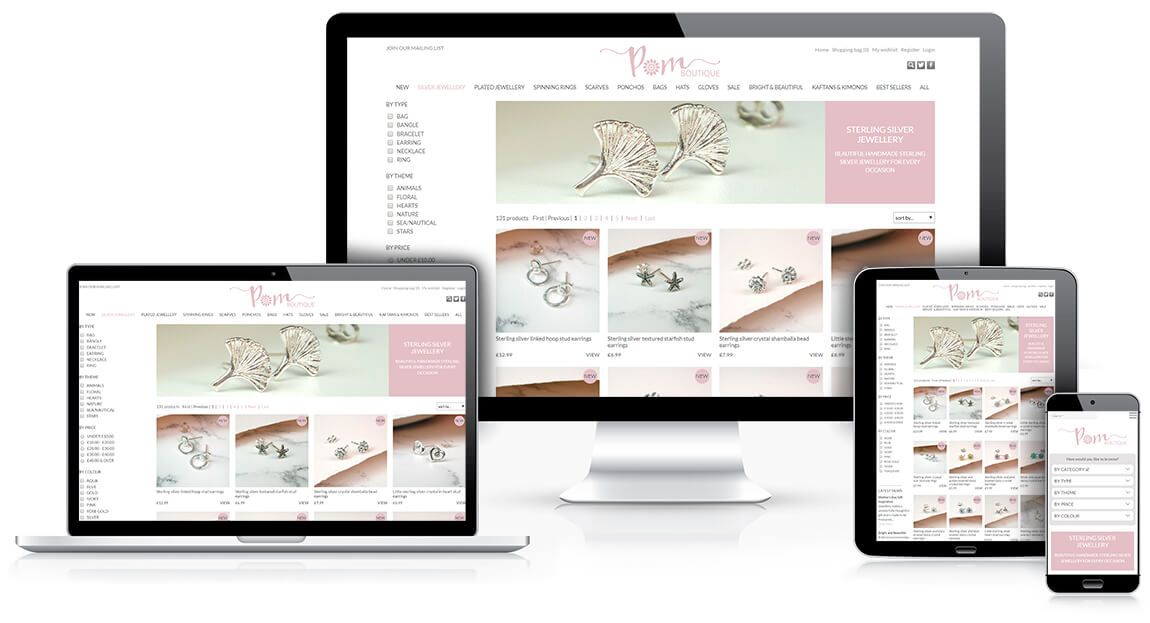
Advertising | Coaching | Web Design
Powerful, strategy-driven solutions for small to large businesses ready to gain more customers and grow.





My Services

Let's Grow Your Business | Coaching
Behind every thriving business is a strong strategy and a trusted advisor. My consulting services offer expert insight, personalized guidance, and a collaborative approach that puts your goals first. Whether you're just starting or scaling up, I’ll help you move forward with clarity and confidence.
Your next step is just one conversation away.

Business growth doesn’t happen by chance, it happens when your offer, pricing, messaging, and customer acquisition system all work together. We’ll identify what’s holding you back, build a clear and realistic strategy, and then connect it to execution across the platforms that drive results.
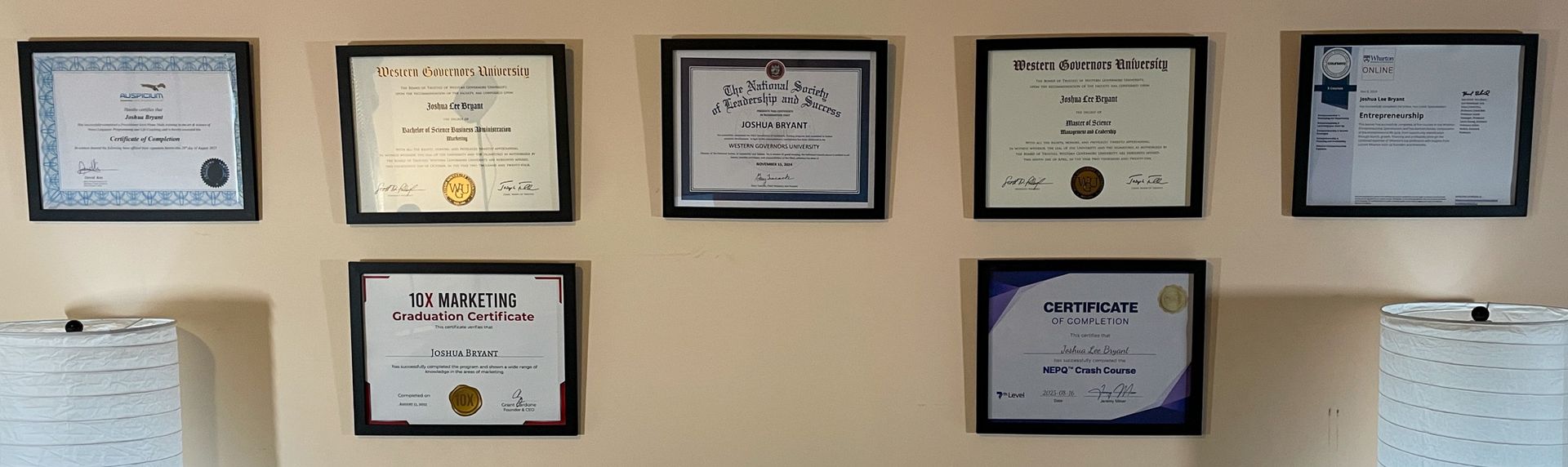
You need to be able to trust that the person helping your business is properly qualified to do the job, as your budget, brand, and growth are at stake. I’m a business major, author, and experienced mentor who has helped 200+ businesses and taught small business development workshops through organizations like the SBDC, People Inc, and the YWCA. Backed by formal education (MSML and a BSBA in Marketing), advanced training in business strategy and entrepreneurship, and certifications in marketing and sales frameworks, I bring both strategic depth and real-world execution to every engagement, so your growth plan is built on skill, not guesswork.

Free Consultation
Ready To Accelerate Your Business To New Heights? I'm here to help. Fill out this form and I will promptly reach out to you for a Free Consultation!